Broken Garage Door Spring? Signs & Repair
How to Tell If Your Garage Door Spring Is Broken and What to Do Next
Your garage door works fine until the moment it doesn't. If you woke up this morning to a door that won't move, makes a loud bang, or hangs crooked in the frame, there is a good chance a broken spring is behind it. It is one of the most common garage door problems homeowners face, and it can happen without much warning.
This guide will walk you through exactly how to identify a broken garage door spring, what causes springs to fail, what you should and should not do about it, and when it is time to call a professional.
What Does a Garage Door Spring Actually Do?
Before diagnosing the problem, it helps to understand the job. Garage door springs carry most of the weight of your door. A standard residential garage door can weigh anywhere from 130 to 400 pounds. Without a functioning spring, your opener motor is trying to lift all of that on its own, which it cannot do safely or effectively.
There are two main types of garage door springs:
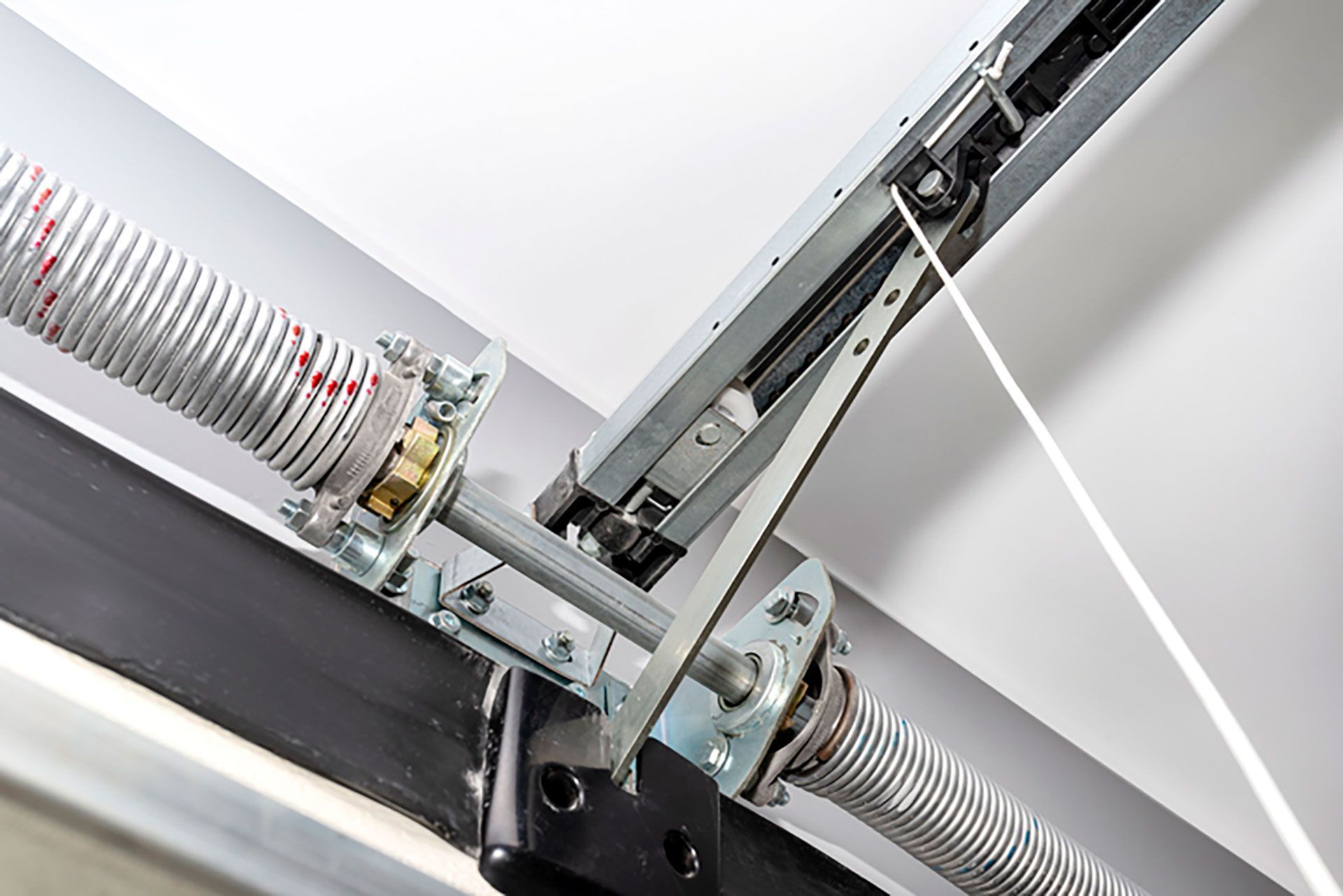
- Torsion springs - Mounted horizontally above the door opening on a metal shaft. These are the most common type in modern homes and handle the majority of the lifting work.
- Extension springs - Mounted on either side of the door tracks, running parallel to the horizontal rails. These stretch and contract as the door moves.
Both types wear out over time. Most springs are rated for 10,000 cycles, which works out to roughly 7 to 10 years of average use.
Signs Your Garage Door Spring Is Broken
You do not always need to look at the spring to know it has failed. Here are the most common signs to watch for:
The door will not open at all This is the most obvious symptom. If you press the opener button and the motor runs but the door barely budges or does not move at all, the spring has likely snapped. The opener is not designed to lift the full door weight without spring assistance.
You heard a loud bang from the garage. A broken torsion spring often makes a noise that sounds like a firecracker or a gunshot. If you heard a sudden loud bang from your garage, especially overnight, that is almost always a spring failure.
The door opens only a few inches, then stops. Many modern openers have a built-in safety feature that detects excess resistance and halts the door. If your door lifts 6 inches and stops, the opener is sensing the extra strain from a broken spring and shutting down to protect the motor.
The door looks crooked or uneven when opening If one side rises faster than the other, or the door tilts as it moves, one spring may have broken while the other is still functioning. This puts uneven stress on the entire system.
You can visibly see a gap in the spring If you look at your torsion spring above the door and see a clear gap or separation in the coil, it is broken. A healthy torsion spring is a continuous, tightly wound coil with no space in the middle.
The door feels extremely heavy when lifted manually Disconnect the opener and try to lift the door by hand. A properly balanced door should rise smoothly and stay in place at about waist height. If it feels like dead weight, the spring is not doing its job.
Common Causes of Garage Door Spring Failure
Understanding why springs break can help you avoid premature failure:
- Normal wear and tear - Every time the door opens or closes, the spring completes one cycle. At 10,000 cycles, the metal fatigues and eventually snaps. There is no avoiding this eventually; it is simply the end of the spring's lifespan.
- Rust and corrosion - Humidity and moisture, which are common in the Houston area and surrounding communities, can cause springs to rust. Rust increases friction on the coils and accelerates wear significantly.
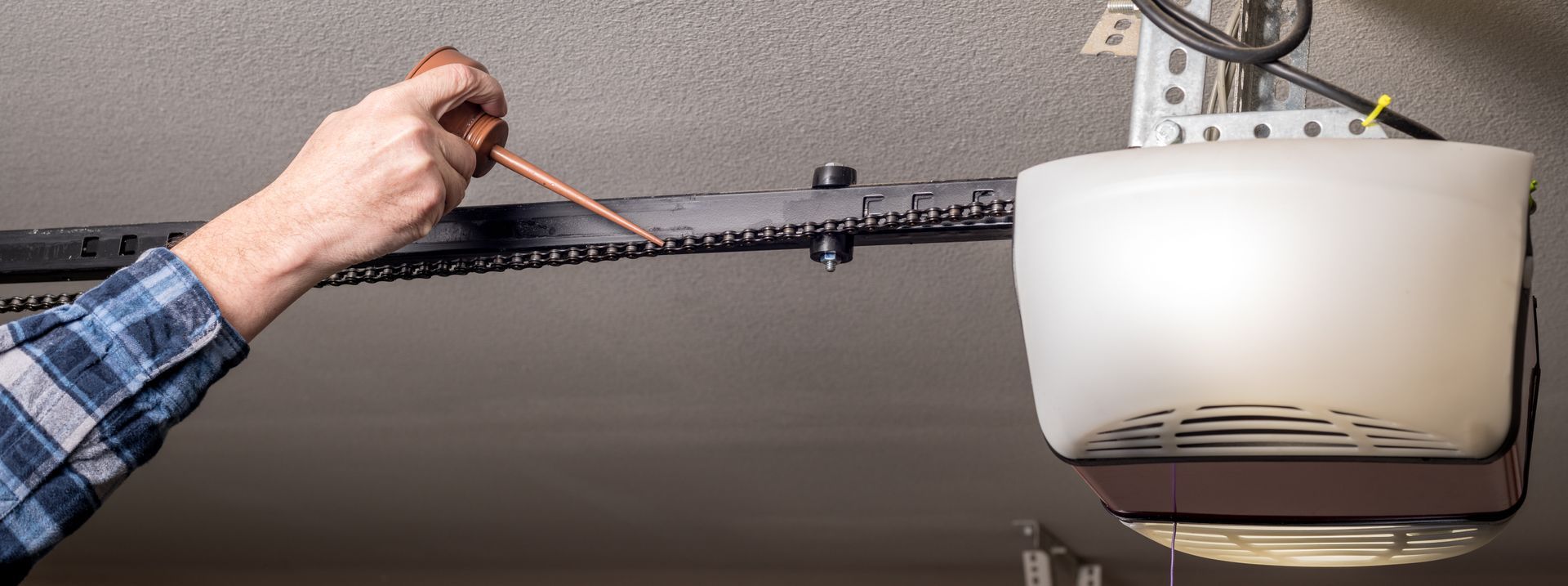
- Lack of lubrication - Springs that are never lubricated wear out faster. A thin coat of garage door lubricant applied twice a year can add years to a spring's life.
- Improper spring size - If a spring was installed that is too light for the door weight, it will wear out much faster than expected. This is a common issue when doors are replaced without updating the spring system.
- Cold weather - Sudden temperature drops cause metal to contract, which can stress already-worn springs past their breaking point.
Can You Fix or Adjust a Garage Door Spring Yourself?
In short: garage door spring repair and replacement is one of the most dangerous DIY jobs a homeowner can attempt.
Torsion springs are wound under extreme tension. When a spring snaps or is improperly released, it releases that energy instantly and violently. Injuries from garage door spring failures are serious and well-documented, including lacerations, broken bones, and worse.
Here is what you can safely do on your own:
- Visually inspect the spring for a visible gap or break
- Disconnect the opener and test the door's manual weight balance
- Apply lubricant to a spring that is still intact and functioning
- Call a professional for anything beyond visual inspection
Here is what you should leave to a trained technician:
- Removing or installing a torsion spring
- Adjusting spring tension
- Replacing cables, which work in tandem with the spring system
- Any garage door spring adjustment after a repair
Even if the spring looks intact but the door is behaving strangely, garage door spring adjustment requires specific tools and training to do safely. Getting the tension wrong can cause the door to slam, snap the cable, or damage the opener.
Broken Garage Door Spring Repair: What the Process Looks Like
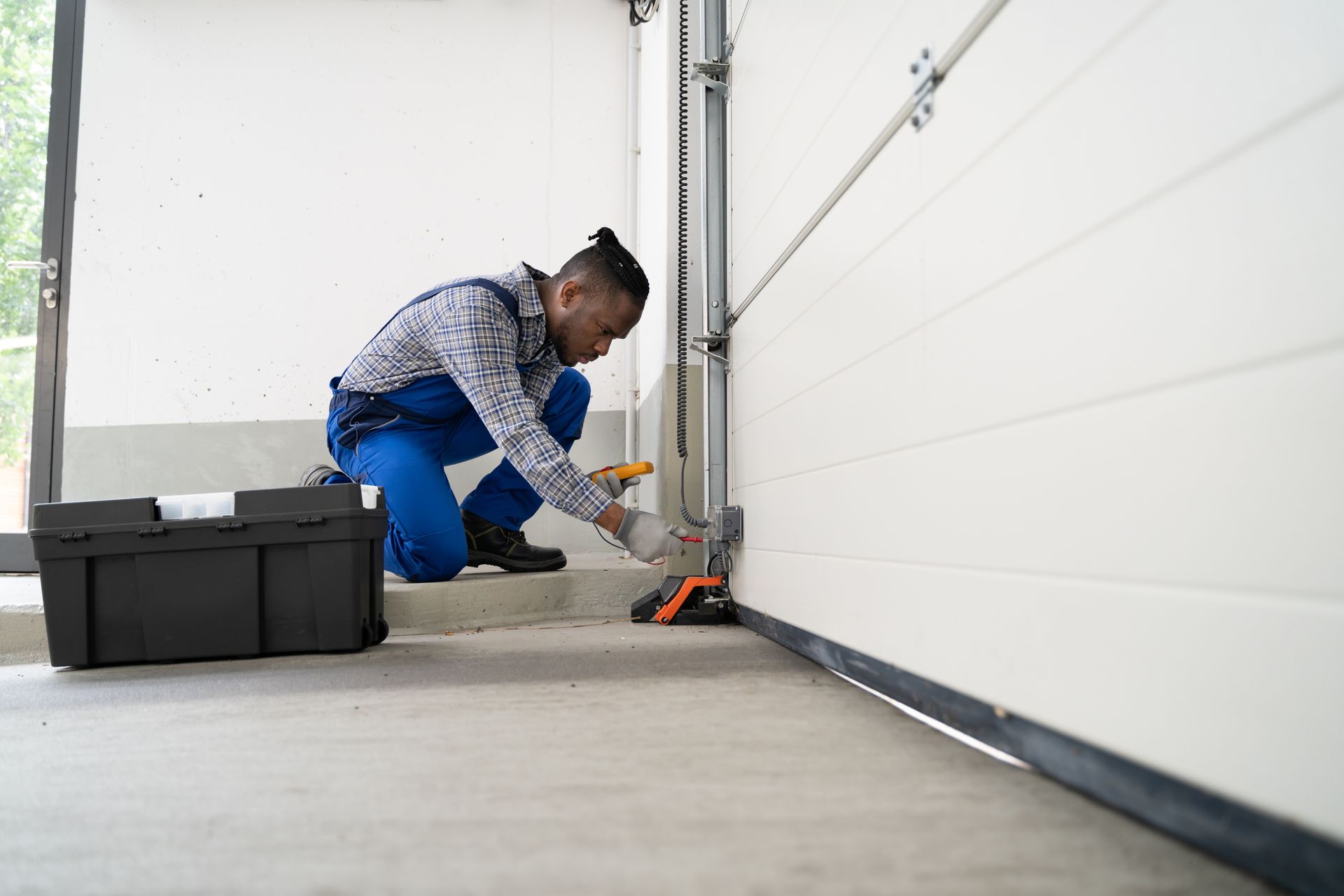
When you call Door Mart Services for broken garage door spring repair, here is what you can expect:
- Assessment - Our technician identifies the spring type, size, and whether other components like cables or drums were damaged when the spring broke
- Spring selection - The right replacement spring is matched to your specific door weight and size, not just a standard-fit option
- Safe removal - The broken spring is carefully removed using the proper winding bars and safety equipment
- Installation and tensioning - The new spring is installed and wound to the correct tension for your door
- Balance test - The door is manually tested for proper balance before the opener is reconnected
- Full system check - Cables, drums, rollers, and the opener are inspected to confirm nothing else was stressed or damaged during the failure
The entire process typically takes under two hours for a standard residential door.
How Long Do Replacement Springs Last?
Standard replacement springs are rated for 10,000 cycles, but higher-cycle options are available. If you use your garage door frequently or simply want fewer repairs over time, ask about springs rated for 20,000 or even 30,000 cycles. The upfront cost is slightly higher, but the long-term value is significant.
Do Not Let a Broken Spring Keep You Stuck
A broken garage door spring is not a problem you can ignore or work around for long. Every time you force the opener to run without a functioning spring, you risk burning out the motor on top of the spring repair. The sooner it gets fixed, the less it costs overall.
Call Door Mart Services for same-day broken garage door spring repair. Our technicians are ready to diagnose the problem, show up fast, and get your door working safely again.